
Koh Chang Travel Guide: Thailand’s Wild Jungle Island
Koh Chang is not your typical Thai island. While places like Phuket or Samui have traded their soul for massive resorts, Koh Chang—the “Elephant Island”—has managed to remain rugged, wild, and refreshingly quiet, especially if you head south. It’s a place where the jungle literally meets the sea, and where life slows down to the rhythm of the tides.
I spent over a week on this island, and by the end, I was caught in that classic traveler’s dilemma: a deep desire to go home, yet a painful longing to never leave this peaceful sanctuary.
🎒 Trip Essentials
- 🌡️ Best Time:
Nov to Feb (Dry & Pleasant) - 🛵 Transport:
Scooter (Essential but hilly!) - 💰 Daily Budget:
€25 - €45 (Great value) - 📶 Connectivity:
Good 4G in villages, spotty in the deep jungle
💡 Quick Tips
- 🚢 Ferry Times:
Ferries run roughly every hour until 7 PM. - 🏧 Cash is King:
The South has fewer ATMs; withdraw money in the North before heading down. - 🐒 Wildlife:
Watch out for monkeys on the main road; they can be aggressive if they see food! - 🛵 Safety:
The roads are incredibly steep and winding. Drive slowly.
1. Getting There & Getting Around: The Adventure Begins
Koh Chang is the second largest island in Thailand, but because it has no airport, reaching it always involves a bit of a journey. Whether you are coming from the city or across the border, the final leg always ends with a ferry ride from Trat.
How to Reach the Island
There are three main routes to reach the “Elephant Island,” each with its own vibe:
- From Cambodia (The Adventurous Route):My own journey from Siem Reap took a full 12 hours. It’s a trek that requires patience. You’ll typically take a minibus to the Poipet/Aranyaprathet border.
- Pro Tip: If you entered Cambodia with an e-visa, you must have a printed paper copy to exit. We didn’t have one, and it cost us time and a “fee” to get it printed at the border. From the border, it’s another 4 to 5 hours in a van to reach the ferry piers in Trat.
- From Bangkok (The Most Popular Route): This is the easiest way. You can take a high-quality bus or a shared van from Ekkamai Bus Terminal or Mo Chit. The journey takes about 5 to 6 hours. For more comfort, some travelers fly from Suvarnabhumi to Trat Airport (TDX) with Bangkok Airways, though it is one of the most expensive short flights in Thailand.
- From Pattaya (The Coastal Route): If you are coming from the coast, shared minivans run daily between Pattaya and the Trat ferry piers. It’s a direct 4-hour drive. It’s a convenient option if you want to skip the madness of Bangkok.
The Ferry Crossing
There are two main piers in Trat: Ao Thammachat (the fastest, 30-45 mins) and Center Point (slower, about 1 hour). I took the ferry around noon on my way out, and it’s a beautiful transition. Watching the mainland disappear as the massive, jungle-clad mountains of Koh Chang grow larger is the moment you realize you’re entering a different world.
Ferries run approximately every hour until 7 PM. For detailed schedules and bookings, check Mu Ko Chang National Park official site or 12Go.asia.
Navigating the Steep Slopes
Once you land, “Songthaews” (pickup taxis) wait to take you to your hotel. I quickly realized that Koh Chang has some of the most dangerous roads I’ve seen in Thailand. The island is mountainous, and the roads between the beaches have incredibly steep inclines and hair-pin turns.
The Economics: Like in Chiang Rai, renting a scooter is cheap (around 200-250 THB/day), but keep an eye on your fuel—there are fewer petrol stations once you pass Lonely Beach heading south.
Scooter Rental: It is the best way to be free, but only if you are an experienced rider.
Plan your trip to Koh Chang
Need to book your bus from Bangkok or a ferry? Check all schedules and prices on 12Go.asia.
2. Exploring the Island: From Busy Shores to the Wild South
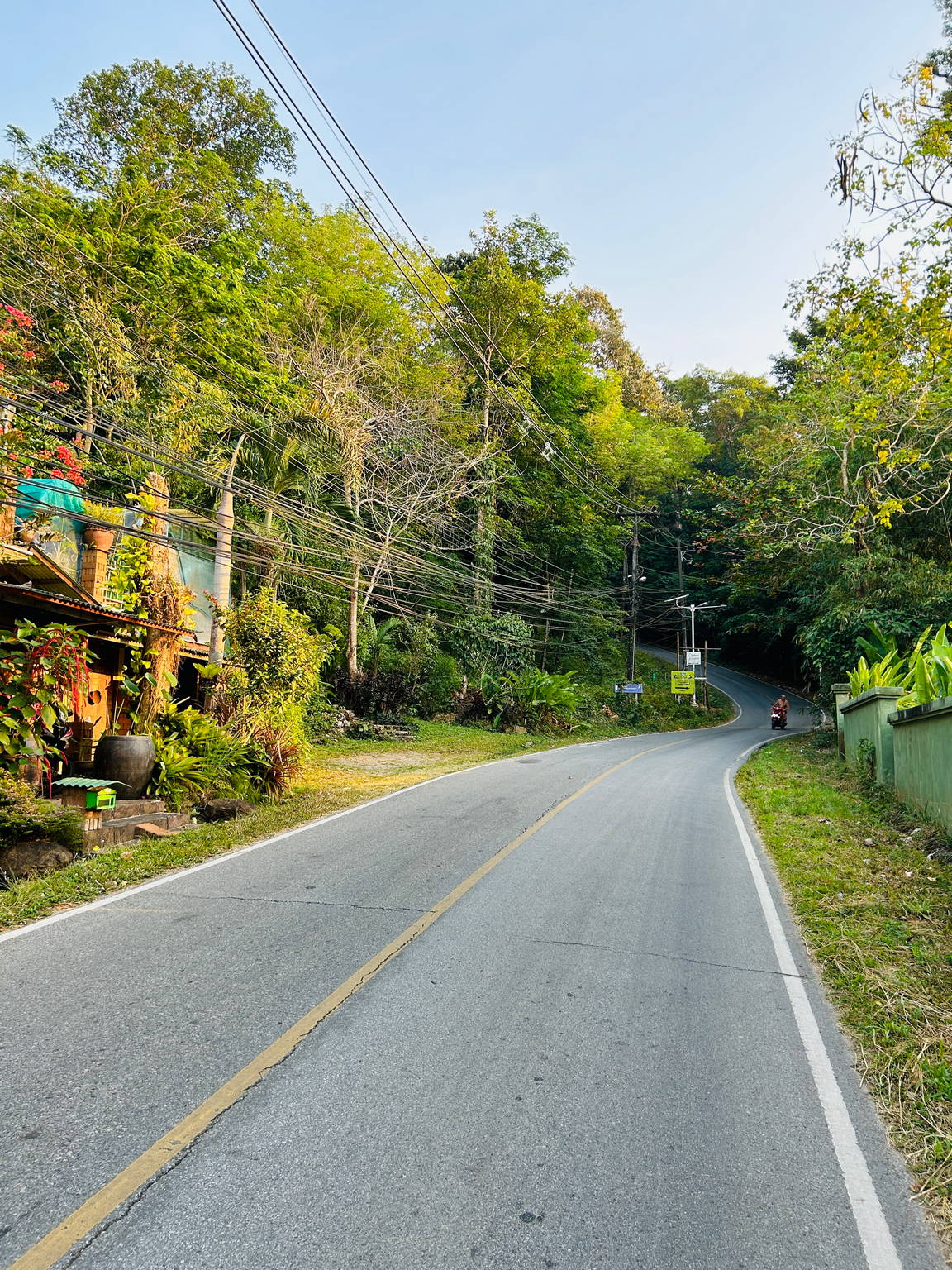
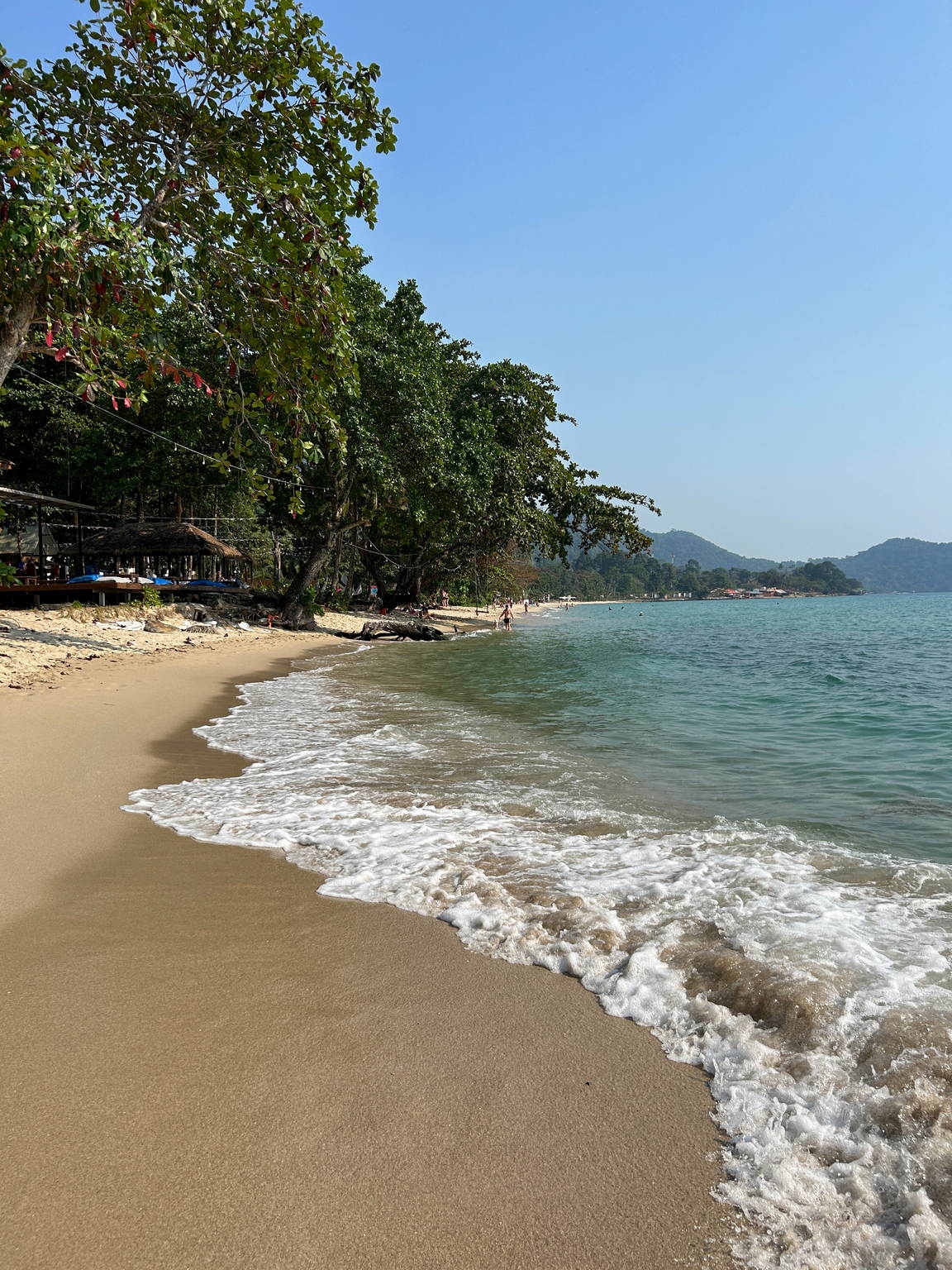
Koh Chang is a land of contrasts. Thailand’s second-largest island after Phuket, Koh Chang covers 217 km² and is dominated by jungle-covered mountains, with Khao Salak Phet reaching 743 meters—the highest peak in the region. The further south you drive, the more the concrete disappears, replaced by leaning palms and the sound of cicadas. The island is essentially one long road that doesn’t quite go all the way around, creating a “dead-end” feel in the south that keeps the crowds away.
The Northern Hubs vs. The Quiet South
Most travelers congregate in the north at White Sand Beach (Hat Sai Khao) or Klong Prao. These areas are great for families and those seeking convenience, with plenty of ATMs and supermarkets. However, I felt that the true soul of the island lies further down the coast.
- Lonely Beach: Don’t let the name fool you; it’s the backpacker heart of the island. I visited Lonely Beach on Day 5, and while the beach itself is quite pretty, it was a bit crowded for my taste. It’s the place to go if you want live music, tattoo parlors, and a younger vibe.
- Bailan Bay: This is where I found my peace. Located just south of Lonely Beach, it’s much quieter. There isn’t a massive sandy beach here, but the rocky coastline and the jungle backdrop create a much more “roots” atmosphere.
Life in the South: The Art of Doing Nothing
I spent a lot of my time simply walking between the smaller villages in the south. On Day 7, I explored the areas north of our resort to get a feel for the local life.
There is a specific magic to this part of the island. I loved the simple routine of finding a small, family-run restaurant and spending the evening talking with other travelers. One of my best memories was a long night spent eating and drinking with a German traveler and his mother in a tiny garden restaurant we stumbled upon. It’s the kind of place where you arrive as a stranger and leave feeling like part of a community.
The “Elephant Bay” Sanctuary
For me, the Elephant Bay Resort was the highlight of the stay. The garden opens directly onto the sea, and the pool area is incredibly peaceful.
The Recommendation: If you want a place where you can actually hear the waves and the birds instead of techno music, this is where you should stay.t.
The Vibe: It’s a place for long conversations. Whether it was with the Dutch owner or the German guy I met on Day 4, the atmosphere encouraged deep, interesting discussions that lasted until 2 AM.
3. Island Life: Coastal Villages & Food Culture
Unlike the night markets of the mainland, Koh Chang’s food scene is spread across its coastal villages. There is no “center” here, but rather a string of local spots where the catch of the day is always the star of the show.
The Charm of Bailan Bay
Staying in Bailan was a strategic choice for peace, but it turned out to be a culinary surprise. While it’s quieter than its neighbors, the village is packed with a multitude of small, family-run restaurants.
- The “HikinThai” Experience: I found that every small place we tried was as good as the last. There is something special about eating in a small garden, surrounded by the sound of the jungle, where the owner is also the chef.
- The Social Vibe: As I mentioned in my journal, these restaurants are where we met most of the people we connected with. It’s the kind of place where you stay for one drink and end up talking until 2 AM.
Bang Bao: The Floating Seafood Village
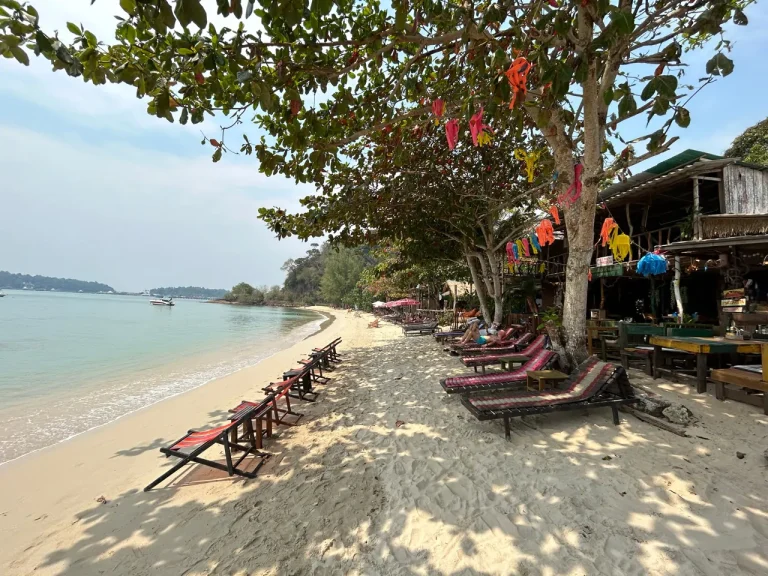
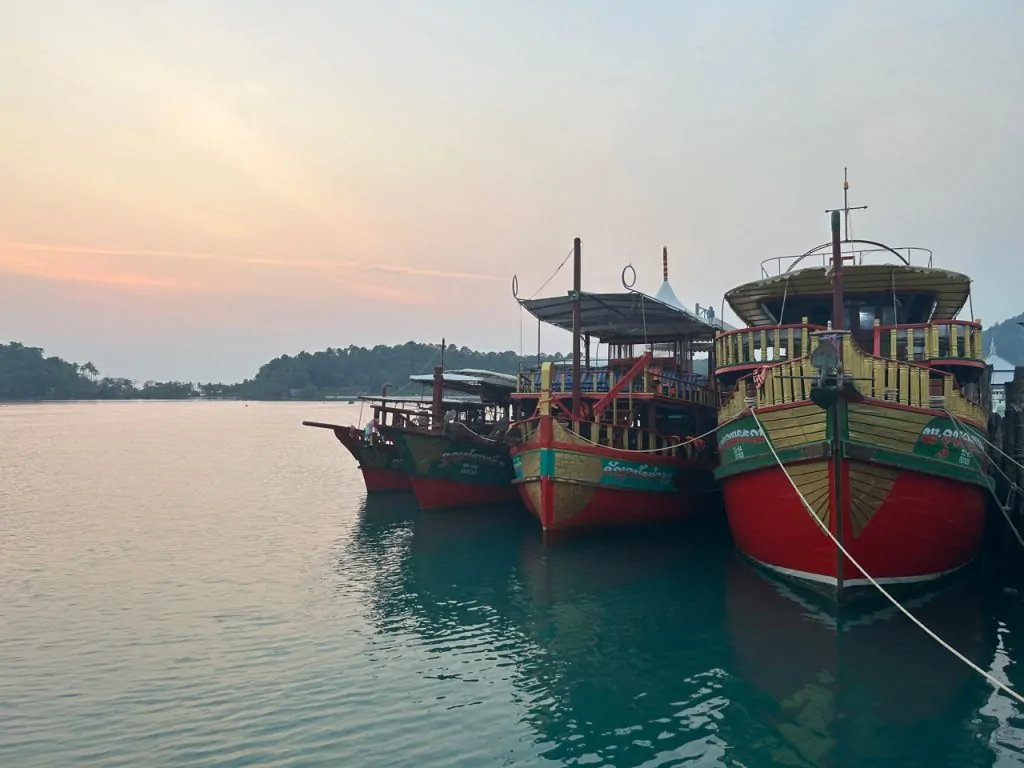
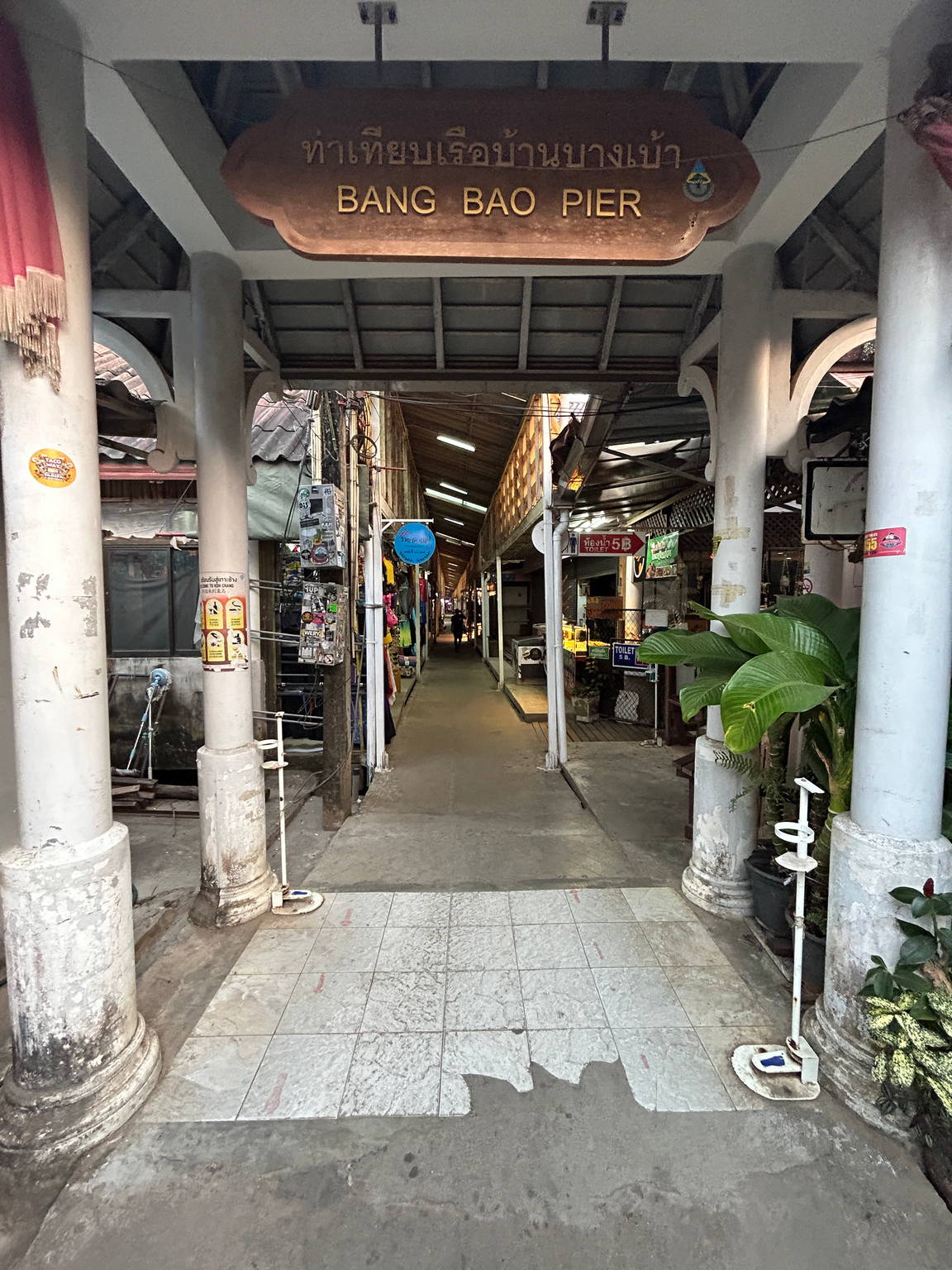
For a real “heritage” food experience, you have to head to the far south to Bang Bao. This is an old fishing village built entirely on stilts over the water.
- The Must-Do: Walking down the long pier, you’ll pass dozens of seafood restaurants displaying fresh fish, giant prawns, and crabs. According to the Guide du Routard, this is the best place on the island for a traditional seafood feast.
- My Advice: Go there in the late afternoon to see the colorful fishing boats come in, then grab a table at the end of a pier for a sunset dinner.
What Else to Explore?
- The Saturday Scene: While smaller than the mainland, there are local “walking markets” that pop up near Klong Prao. It’s less touristy and offers a great chance to try Khanom Krok (coconut pancakes) or grilled pork skewers (Moo Ping) for a few bahts.
- White Sand Beach Market: If you miss the buzz of a classic night market, the main street of White Sand Beach transforms every evening. It’s more tourist-oriented, but the variety of fruit shakes and international street food is impressive.
4. Into the Wild: Jungle Treks and Hidden Falls
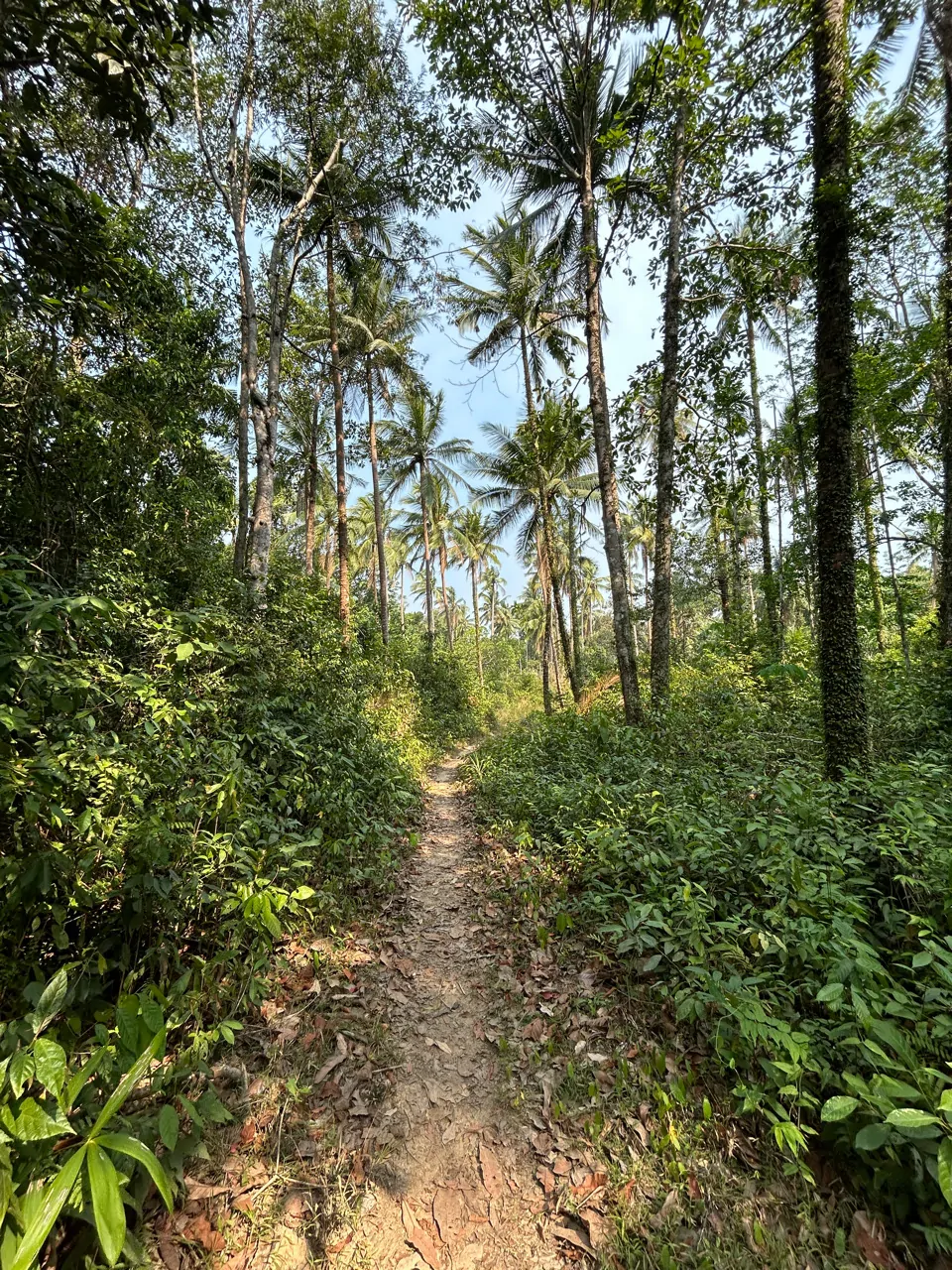

If you think Koh Chang is just about lying on a beach, you haven’t looked at the mountains behind you. Over 70% of the island is covered in virgin rainforest. Unlike the bamboo-heavy forests of Chiang Rai, the jungle here is a dense, tropical “evergreen” canopy where the air is thick with humidity and the sounds of exotic birds.
The South Hike: A 25km Adventure
While Delphine was resting at the resort to recover from a cold, I teamed up with a Frenchman I had met the day before to tackle one of the island’s most challenging treks.
- The Terrain: This isn’t a walk in the park. Using a technical GPX track, we pushed through the dense vegetation of the south. I found the trails to be quite demanding, with steep climbs where you often have to use roots as ladders.
- The Vegetation: The jungle here is raw. You are surrounded by massive dipterocarp trees and thick vines. It feels much more “untamed” than the trails in the north of Thailand.
Reaching the Summit & The “Ghost Ship”
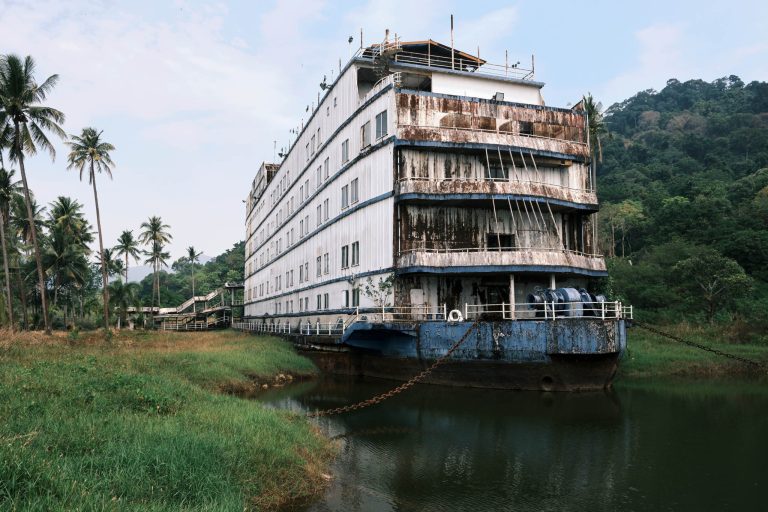
The goal of this hike was twofold: reaching one of the island’s high points and discovering the mysterious Ghost Ship.
- The View: Reaching the ridges offers glimpses of the Gulf of Thailand through the trees, a rewarding sight after hours of climbing in the heat.
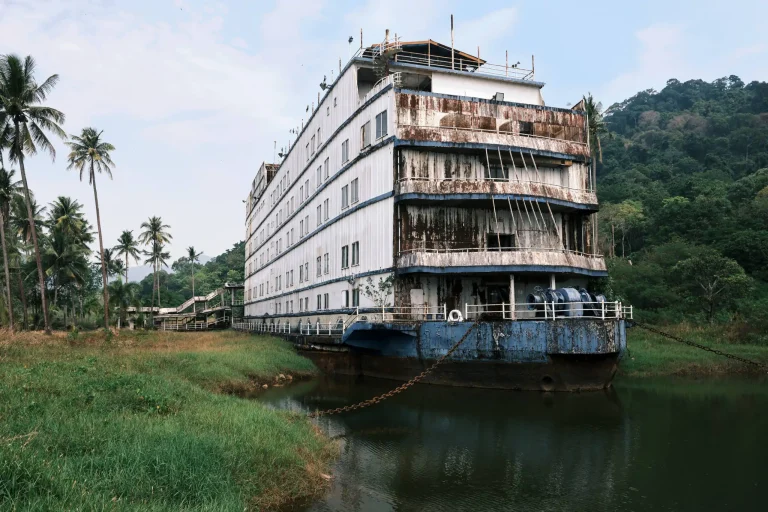
- The Mysterious Ghost Ship (UPDATE – December 2024): Hidden away in the southern bay once lay the “Galaxy,” a massive abandoned 7-story cruise liner that had been converted into a floating hotel. This concrete vessel closed in 2016 and became one of Koh Chang’s most eerie attractions. When I visited, I found the atmosphere hauntingly beautiful—a surreal sight of such a huge vessel being slowly reclaimed by the jungle.
Important Update: In December 2024, the Ghost Ship was destroyed by fire and has since been largely dismantled. While the site no longer offers the same dramatic encounter, it remains part of this southern route’s fascinating history. The mysterious story behind this concrete ship—how it was meant to be a luxury floating resort but never succeeded—adds intrigue to Koh Chang’s quirky recent past.
Hidden Waterfalls: Klong Nueng & Khiri Phet
While many tourists head to the easy-to-reach Klong Plu waterfall, the southern falls offer a much more rewarding experience for hikers.
- Klong Nueng: Often considered the tallest on the island, the path to get there is a scramble over boulders and through the stream.
- Khiri Phet: Located near the fishing village of Salak Phet, it’s a multi-tiered fall. According to the Guide du Routard, the upper tiers are rarely visited and offer the kind of solitude you can only find in Koh Chang’s deep interior.
🥾 Read my full guide & download the GPX track for the Koh Chang South Hike here!
The national park features six accessible waterfalls: Klong Plu (the most magnificent, with three levels), Than Mayom (historically visited by King Rama V in 1876, Rama VI in 1922, and Rama VII in 1927), Klong Chao Lueam, Klong Nonsi, Klong Nueng, and Khiri Phet. Entrance fees of 200 THB apply to Than Mayom and Klong Plu waterfalls.
5. Practical Heritage: The Spirit of the East
Koh Chang’s history is deeply intertwined with its geography. Being so close to the Cambodian border, the island has a unique “frontier” feel that you won’t find in the more central Thai islands.
A History of Resistance and Nature: Before WWII, Koh Chang was a quiet farming island, with residents primarily working in rubber-tapping and coconut harvesting rather than fishing. The island witnessed a significant naval engagement during the Franco-Thai War (October 1940 – January 1941). On January 17, 1941, a French naval squadron attacked Thai vessels anchored off Ko Chang’s southeastern coast. The Battle of Ko Chang resulted in Thailand losing two torpedo boats (HTMS Chonburi and HTMS Songkhla) and the coastal defense ship HTMS Thonburi, which was later raised, repaired in Japan, and used as a training ship. Today, a naval battle monument stands on the southeastern beach, with marble plates describing this dramatic chapter in Thai history.
Most of the island is part of the Mu Ko Chang National Park, officially established on December 31, 1982 as Thailand’s 45th national park. The park covers 650 km² across 52 islands, with 70% being marine area. This protected status has shielded it from the hyper-development seen elsewhere—over 70% of Koh Chang remains untouched rainforest, making it one of the last places in Thailand with proper evergreen forests at higher elevations.
The Slow Life of the South
What I loved most about the southern part of the island (around Bailan and Bang Bao) is the “Slow Life” philosophy.
- Community Vibe: Unlike the anonymous resorts of the north, life here revolves around small communities. I felt this strongly during our long evenings at the resort. People take the time to talk, to share travel stories, and to live according to the rhythm of the sun and the sea.
- Cultural Mix: You’ll see a blend of Thai traditions and a “backpacker-roots” culture that has existed since the 70s. It’s an island where you are encouraged to disconnect.
Wildlife & Conservation
Koh Chang is a biodiversity hotspot within the IUCN Category II protected area. The park is home to:
- 29 mammal species including wild boars, macaques, and deer
- 74 bird species with exotic tropical calls echoing through the canopy
- 42 reptile species including king cobras, reticulated pythons, water monitors, and hawksbill sea turtles
- Endemic species like the Ko Chang Frog (Limnonectes kohchangae)
The coral reefs around islands like Koh Rang and Koh Wai are protected marine zones, offering some of the best diving and snorkeling in the Gulf of Thailand.
6. Plan Your Trip: HikinThai’s Practical Summary
When to Go?
- Best Time: November to February is ideal. The humidity is manageable, and the trails are accessible.
- The Monsoon: Avoid the heavy rainy season (June to October), as the steep roads become extremely dangerous and many jungle trails are closed due to flash flood risks.
For official park information, current entrance fees (200 THB for foreign adults, 100 THB for children), and camping availability, visit the Tourism Authority of Thailand – Trat Province or the Mu Ko Chang National Park portal.
Budgeting Your Adventure
Koh Chang offers incredible value for money, especially in the south.
- Scooter: 200 – 250 THB (€5 – €6.50) / day.
- Meals: A local dinner in Bailan or a seafood feast in Bang Bao will cost between €5 and €12 per person.
- Transport: The taxi-pickup from the ferry to the south can be a bit pricey (around 150-200 THB), but it’s the only way to reach the quiet areas.
My Final Thoughts: The Long Road Back
Leaving Koh Chang was bittersweet. On Day 9, taking the ferry back to the mainland and the long bus ride to Bangkok felt like waking up from a dream. Returning to the chaos of Khao San Road for the third time was a shock to the system.
Koh Chang is the kind of place that stays with you. It’s a mix of raw adventure and absolute tranquility. If you are looking for an island where you can hike 25km through the jungle one day and spend the next three days doing absolutely nothing but reading by the sea, this is your paradise.
7. Where to Stay in Koh Chang
Choosing where to stay on Koh Chang will define your experience. While the north is busy, the south and east offer a more “roots” and tranquil vibe. Based on my week-long stay and the best spots around the island, here are my top recommendations:
- Elephant Bay Resort (My Personal Choice): This was my sanctuary for 9 days. Located in the peaceful Bailan Bay, it’s a true gem for those looking to disconnect.
Why I loved it: The Dutch owner is incredibly welcoming, and the garden pool overlooking the sea is the perfect spot for long conversations. You can even rent your scooter directly on-site. 👉 Check availability - Aana Resort & Spa: A unique stay where you get the best of both worlds. Most of the resort is built along a river lined with mangroves, but it still offers easy access to the beach. It’s perfect for those who love kayaking through nature. 👉 Check availability
- Santhiya Koh Chang Resort: This place is a work of art. Built in traditional Thai style with intricate wood carvings, staying here feels like sleeping in a temple hidden in the jungle. It’s one of the most photogenic spots on the island. 👉 Check availability
- The Mangrove Hideaway Koh Chang: For a total immersion in local life, head to the fishing village of Salak Phet in the south-east. You’ll stay on stilts between the mountains and the mangroves in a peaceful, authentic setting. 👉 Check availability
- Mercure Koh Chang Hideaway: If you want luxury, calm, and comfort, this is the ideal choice. Located in the quiet Bailan area, it offers impeccable service in a raw, wild environment. 👉 Check availability
8. Best Hikes & Trails in the Region
Beyond the beaches, Koh Chang hides some of the most rugged and rewarding trails in the Gulf of Thailand. From scaling the island’s highest peaks to discovering the eerie silence of the abandoned ‘Ghost Ship,’ the southern jungle is a paradise for those who aren’t afraid of a challenge. Check out my detailed guides and GPX tracks to start your own adventure!
-
Koh Chang South Hike: 25km to the Island’s Highest Peak
25 km | 🔴 Challenging — An epic adventure through dense tropical forest to Koh Chang’s highest summit. Discover pristine hidden beaches and the mysterious abandoned Ghost Ship along the way.