Huai Kaeo Waterfall Hike: 12km Akha Loop near Chiang Rai
Looking for a hike that combines raw jungle adventure with authentic mountain culture? Located just 30 minutes from Chiang Rai, the Lam Nam Kok National Park offers a perfect loop for those who want to experience the true spirit of Northern Thailand.
This 12-kilometer journey starts at the serene Huai Mak Liam Hot Springs and takes you deep into the highlands. Along the way, you’ll cross traditional wooden villages and climb to a spectacular viewpoint overlooking an Akha settlement, before tackling the steep path to the impressive Huai Kaeo Waterfall. Between the humidity of the tropical forest and the peaceful descent along the Mae Kok River, this trail is a concentrated dose of everything that makes trekking in Chiang Rai unforgettable.
Technical Specs
📏 Distance : 12.1 km
📈 Elevation Gain : 420 m
🏔️ Max Altitude : 730 m
📉 Min Altitude : 410 m
⏱️ Duration : 3:44
Practical Info
📊 Difficulty : 🟡 Moderate
⭐ Scenery Rating : 4 / ⭐⭐⭐⭐ (Beautiful) / 5
📍 Nearby Town : Doi Hang
This is the main hub and the starting area for this trail.
Interactive Trail Map & Elevation
Lam Nam Kok National Park & Huai Mak Liam Hot Spring
Before hitting the trail, I spent some time exploring the Lam Nam Kok National Park, a 480 km² protected area established in 2002. This is a park I particularly enjoy because it offers a much wilder and more authentic experience than the busier tourist sites in Chiang Rai province.
The starting point of this loop is at the Huai Mak Liam Hot Spring. In my experience, this is the perfect “base camp”: the atmosphere is peaceful and very natural, far from the concrete feel of some other thermal springs. The water emerges at about 65°C, and while you don’t soak in it directly, the steam rising right next to the Kok River creates a mystical atmosphere to start the day.
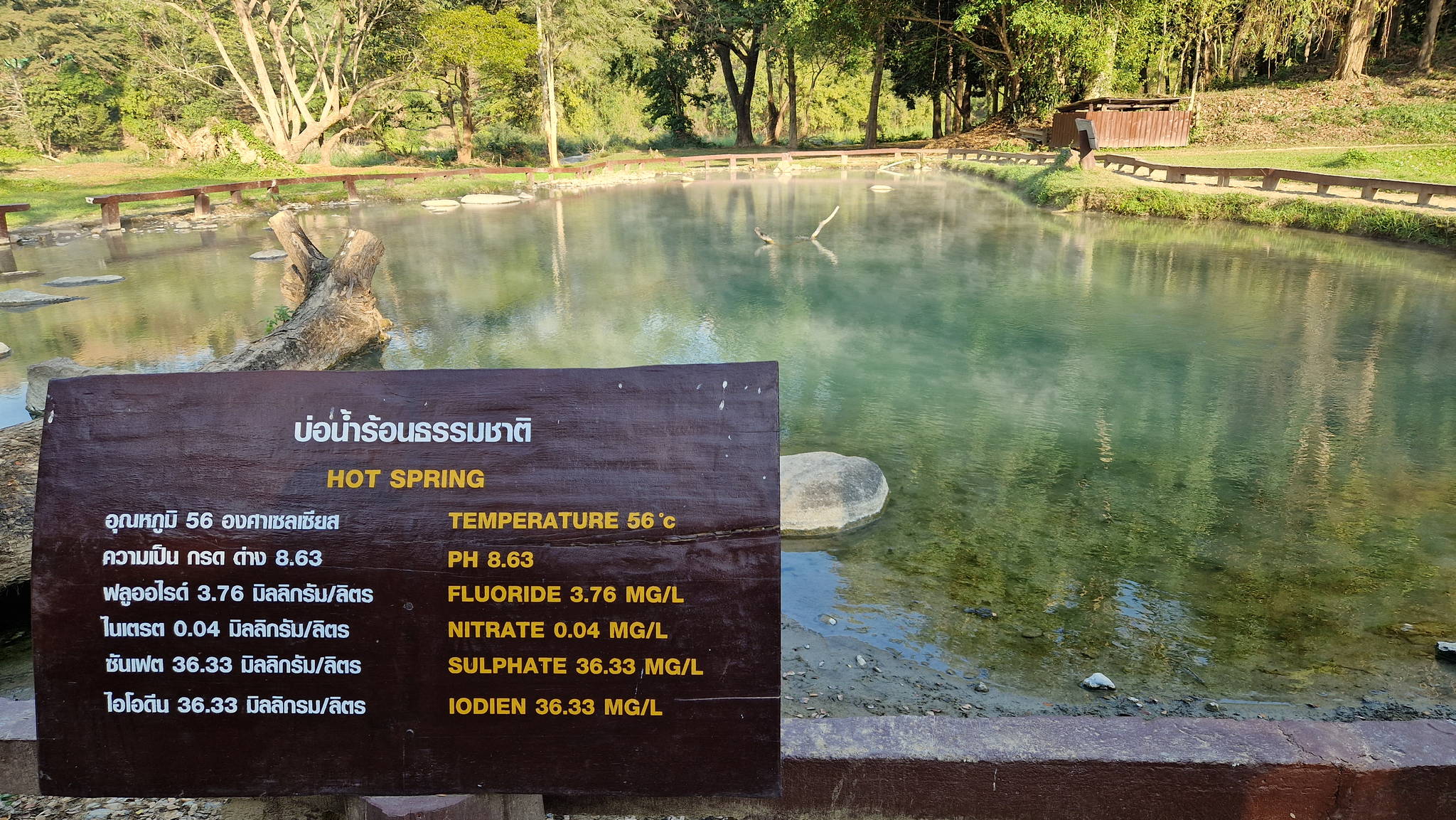
Logistics & Parking: I found the access very convenient, whether you are on a two-wheeler or in a car:
The Setting: Since the springs are located right on the banks of the Kok River, I recommend taking a moment to enjoy the water views before starting the 420-meter ascent.
Facilities: You’ll find basic restrooms here, which is ideal for a final gear check before tackling the 12.1 km loop.
Parking: There is a dedicated area where I was able to park my scooter safely.
The Ascent: Wooden Villages and Akha Highlands
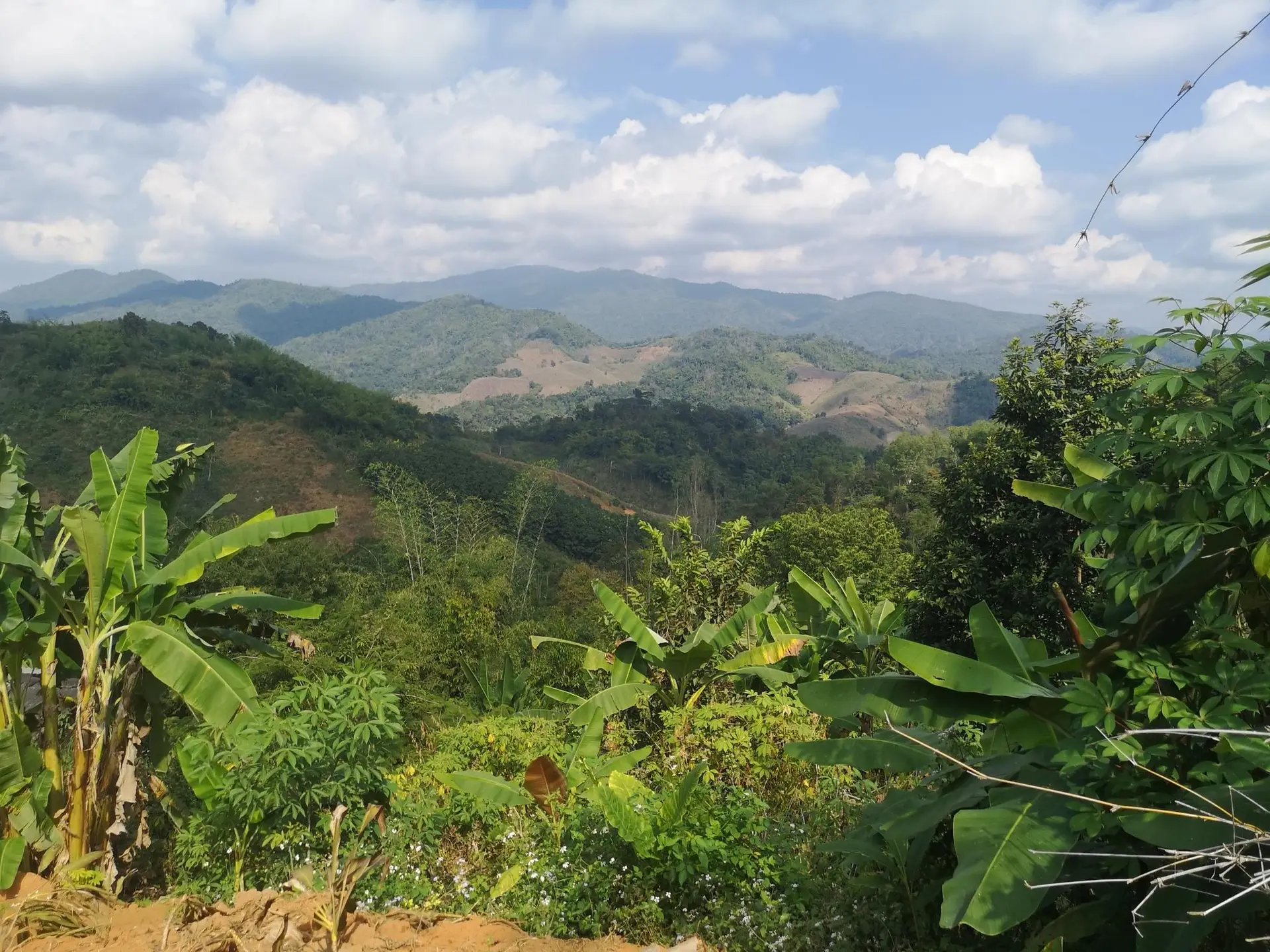
The first few kilometers of the trail set the tone for the day. As I left the riverbanks behind, the path began to climb steadily into the hills. Within the first two kilometers, I reached a traditional wooden village. I always find these sections fascinating; seeing the local architecture and the quiet, rural life of the mountain communities adds a layer of heritage that you just don’t get on purely coastal walks.
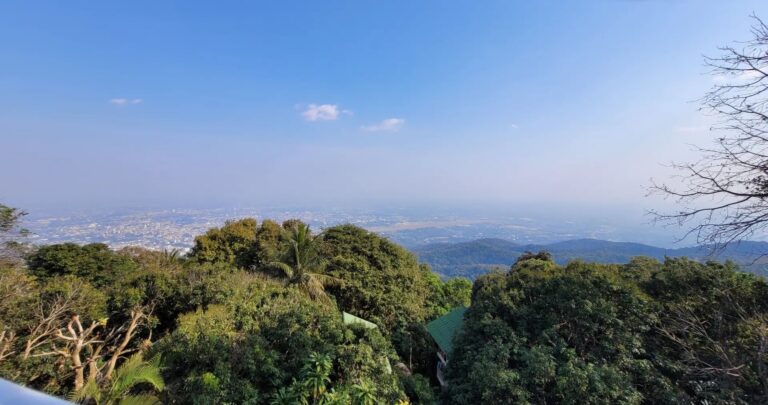
As the elevation increased, the terrain shifted. I followed the path as it wound through the greenery, eventually reaching a series of spectacular viewpoints.
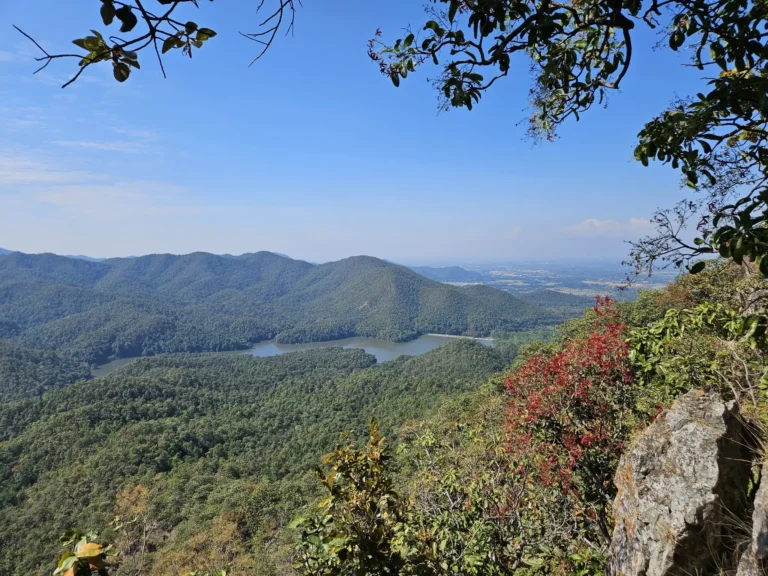
- The Viewpoint (Km 3.78): Here, the forest opens up to offer a panoramic view of the mountains and valleys. It’s the first real reward for the climb.
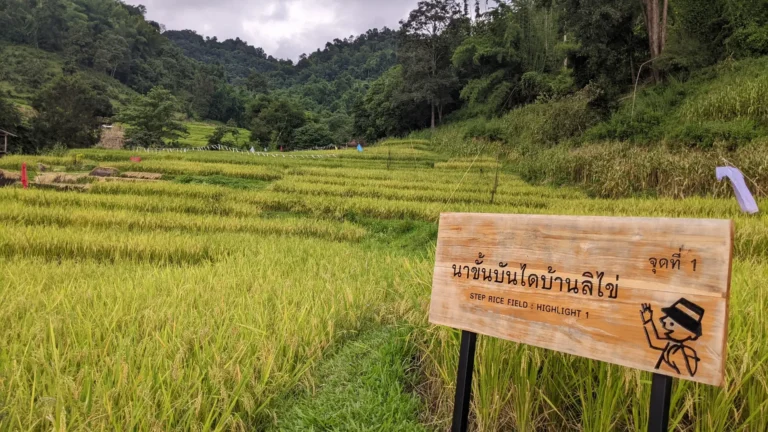
- The Akha Settlement (Km 4.37): Shortly after, I reached a spot with a “nice view of an Akha village.”The Akha people are an ethnic minority who migrated from Tibet and Yunnan centuries ago, known for their distinctive traditional clothing and terraced agriculture. Seeing the clusters of houses perched on the ridges below is a reminder of how remote this area actually is. I highly recommend taking a break here to soak in the landscape before the final push toward the waterfall.
The path at this stage is a mix of natural surfaces and some paved sections used by locals. I noticed that while the climb is moderate, the humidity of the jungle makes the +420m elevation feel like a real workout.
The Huai Kaeo Waterfall: A Demanding Discovery
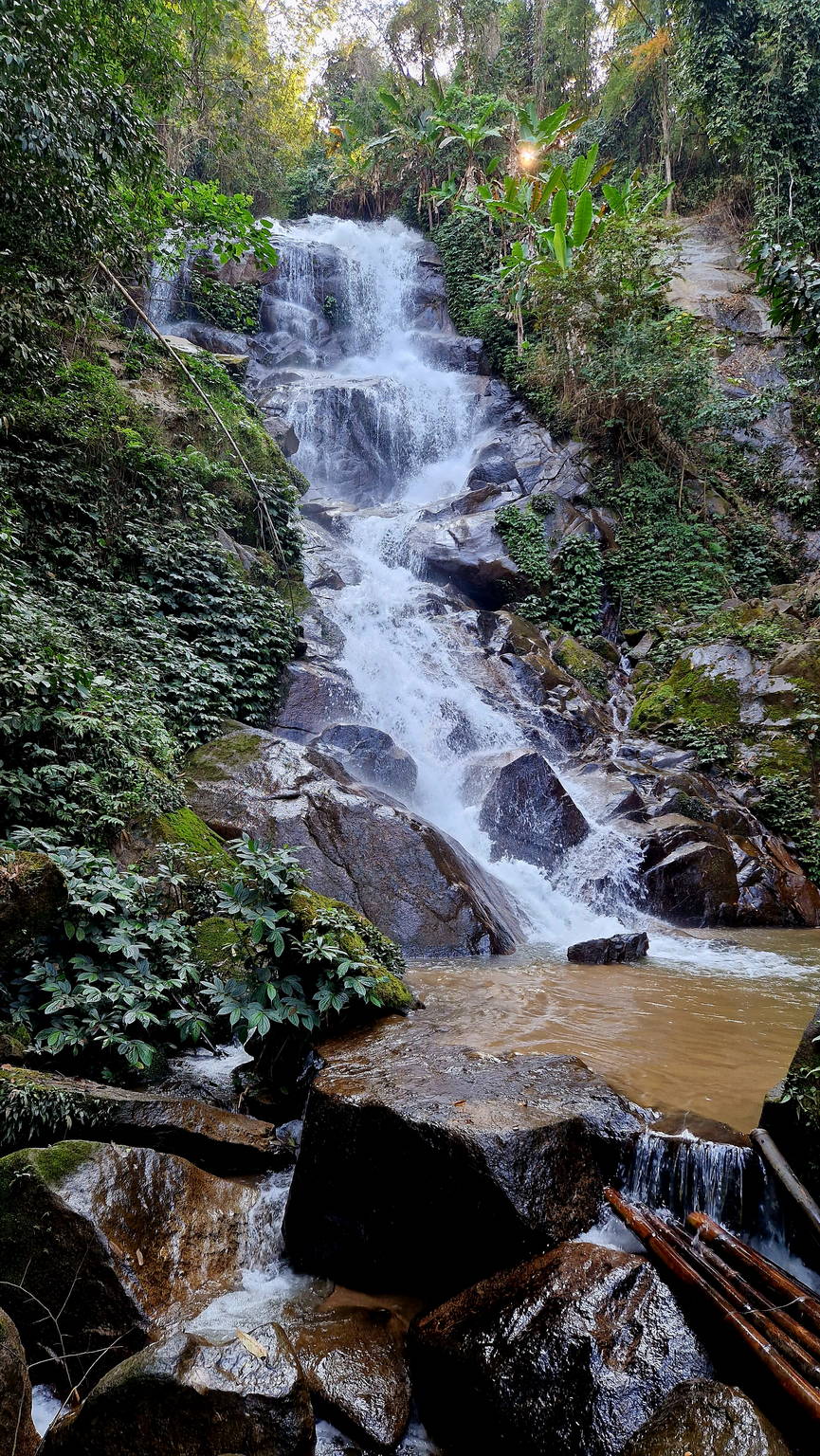
After leaving the Akha viewpoints behind, the trail leads toward the main highlight of the loop: the Huai Kaeo Waterfall.
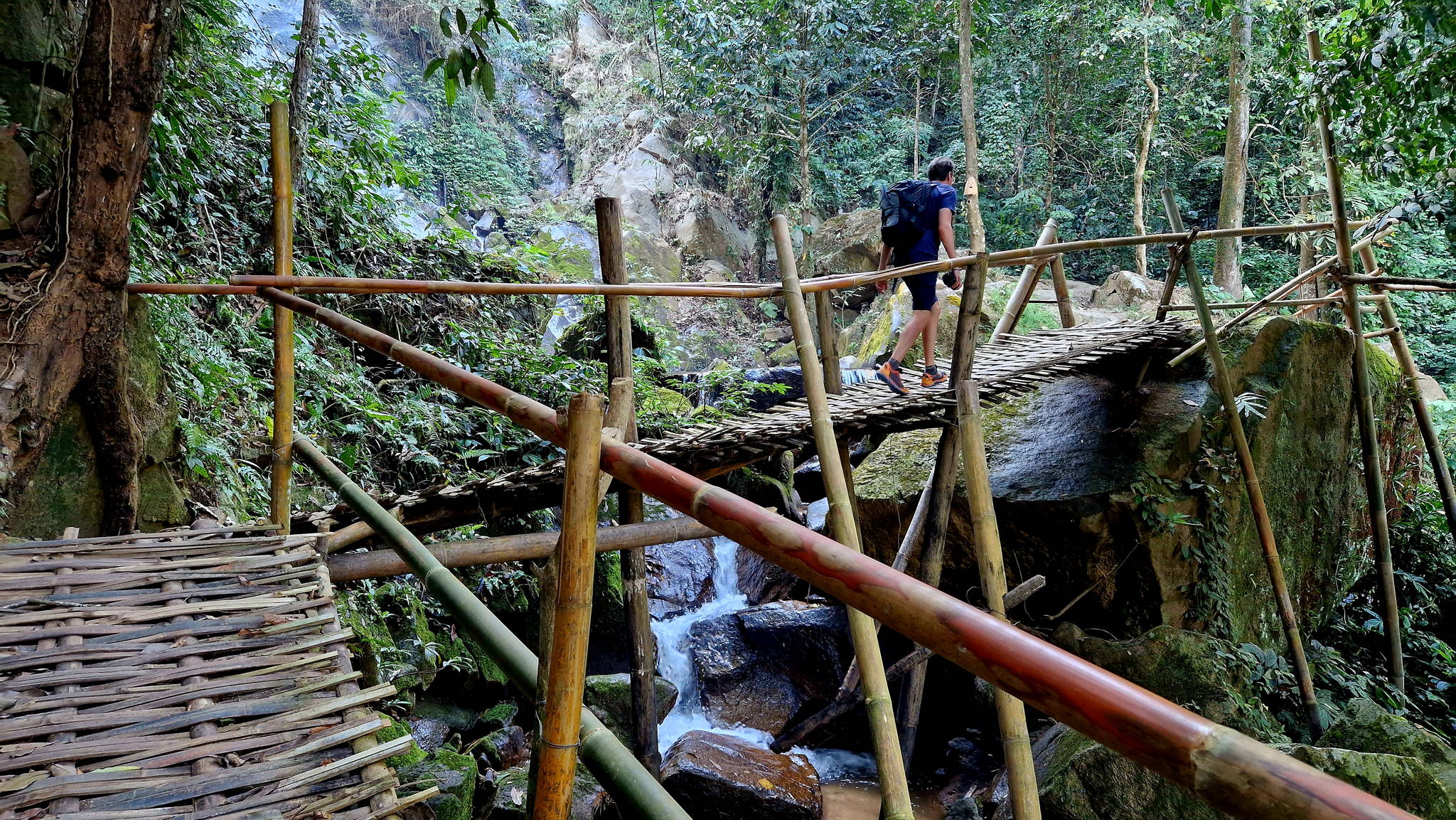
I found this section of the hike to be the most challenging. While the waterfall is impressive, reaching it requires some effort. The descent toward the falls is steep, and as mentioned in some local reviews, the path can be quite “pénible” (tough). I had to be careful with my footing, especially where the jungle humidity makes the rocks and soil slippery.
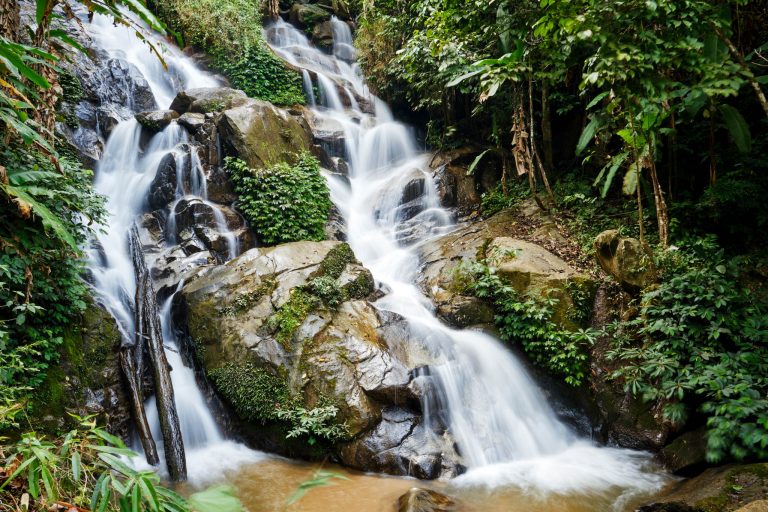
- The Waterfall: Once you arrive at the 6.28 km mark, the sight of Huai Kaeo is a great reward. It is a powerful, multi-tiered waterfall tucked deep into the greenery.
- The Experience: Don’t expect a wide, sandy beach here. The terrain is rugged, and while the mist is incredibly refreshing after the climb, the swimming possibilities are very limited due to the rocky nature of the pool and the force of the water.
I suggest spending some time here just to appreciate the raw power of the falls before starting the next phase of the trek. It’s a perfect spot for photography, but make sure your gear is protected from the spray!
The Descent: Along the Pha Soet and the Mighty Kok River
After the rugged intensity of the waterfall, the trail begins its long descent back toward the valley. I followed the path as it winds down along the Pha Soet River. This section offers a different vibe—the sound of rushing water stays with you as you transition from the steep jungle slopes back to more level ground.
Eventually, the trail opens up as you rejoin the valley of the Mae Nam Kok (the Great Kok River). This is one of the most important waterways in Northern Thailand, and walking along its banks provides a peaceful conclusion to the loop.
- The Local Shop (Km 12.1): Just as I reached the end of the loop, I came across a local shop (Point B on the map). This is a lifesaver for restocking on cold drinks or a quick snack after nearly four hours on the trail.
- The Return: The final stretch follows the river back to the Huai Mak Liam Hot Springs. After covering 12.1 km and 420m of elevation, seeing my scooter parked by the springs was a welcome sight!
The mix of surfaces on this return leg—ranging from natural paths to the “stones” and paved sections used by the riverside communities—makes for an easy pace to reflect on the day’s discovery.
Practical Tips for this Hike
- Water & Food: There are no shops inside the forest park, so carry at least 1 liter of water. You can find small local stalls near the parking lot before you start.
- Transportation: I rented my scooter at Nice Rental in Chiang Rai. They are reliable and the price was fair. The ride takes about 45 minutes from the city center.
- Timing: Try to arrive before 10:00 AM to avoid the midday heat and the small groups of tourists. The forest is much more peaceful in the early morning.
- Essentials: Bring mosquito repellent! The jungle is very humid, and the mosquitoes are quite active near the stream.
Getting to the Trailhead
The hike starts at the Huai Mak Liam Hot Spring, located within the Lam Nam Kok National Park. Since the trailhead is about 25-30km west of Chiang Rai, you’ll need a reliable way to get there:
- Rent a Scooter: This is how I did it, and it’s definitely the most scenic way. I rented my bike at Nice Rental in the city center. Expect to pay around 200-300 THB/day. The ride takes about 45 minutes; while most of the road is paved, stay alert as you enter the park area where the terrain becomes more winding.
- Songthaews (Blue or Yellow Taxis): In Chiang Rai, you can hire a private or shared pickup taxi. You’ll find them near the Night Bazaar or the main bus station. Make sure to negotiate the price for a round trip, as it can be very difficult to find a taxi waiting at the Hot Springs for the return journey.
- Parking: Once you arrive, there is plenty of space at the Hot Springs entrance to safely park your scooter or car before heading toward the trail.
Where to Stay in Chiang Rai
Chiang Rai is a peaceful city and the perfect base for your explorations. Here are my personal recommendations:
- MORA Boutique Hotel: For a touch of luxury in the city center. The rooftop pool is perfect after a day of hiking. 👉 Check availability
- The Legend Chiang Rai: A beautiful riverside resort with traditional Lanna architecture. It feels like a tropical sanctuary. 👉 Check availability
- Tourist Inn: This is where I stayed. It’s budget-friendly, clean, and there is a great motorbike rental right next door. 👉 Check availability
- Riva Vista Riverfront: A very modern and photogenic resort right on the river bank. 👉 Check availability
Heritage & Local Flavors
You cannot leave the Lam Nam Kok area without appreciating the local atmosphere of the valley. After the humidity of a 12-kilometer jungle hike and a 420m climb, taking a moment to refuel is essential.
- Local Refueling: At the end of the loop (Km 12.1), you will find a local shop. I found this to be the perfect spot to grab a cold drink and some snacks right before finishing the trek. It’s a great way to support the local community that maintains these mountain paths.
- Local Flavor: Since you are trekking through Akha territory, you are in the heart of Thailand’s coffee and tea region. If you see local vendors, try the mountain coffee—it’s grown right on these slopes. For a full meal, look for Khao Soi (coconut curry noodle soup) in the nearby villages; it is the signature dish of Northern Thailand and ideal for recovery. The Akha Ama Coffee cooperative in Chiang Rai is a great place to learn about how this community has turned coffee cultivation into sustainable income.
- Pro Tip: Since the hike ends back at the Huai Mak Liam Hot Spring, take a moment to enjoy the park’s natural heritage. The sight of the steam rising near the Kok River is the perfect peaceful conclusion to a demanding day in the jungle.
For more information on Chiang Rai attractions, visit the Tourism Authority of Thailand
Conclusion
The loop through Lam Nam Kok National Park is a rewarding challenge for anyone looking to go beyond the typical tourist trails in Chiang Rai. Unlike shorter walks, this 12-kilometer journey offers a deep dive into the jungle, from the steamy banks of the hot springs to the rugged height of the Huai Kaeo Waterfall. Between the panoramic views of the Akha highlands and the peaceful return along the great Kok River, it’s a trek that captures the wilder, authentic side of Northern Thailand.
If you have some energy left on your way back to the city, consider stopping by the Black House (Baan Dam Museum) or the Blue Temple to round out your day with some of Chiang Rai’s iconic culture!
Happy Hiking!
Plan your trip to Chiang Rai
Need to book your bus from Bangkok or a ferry? Check all schedules and prices on 12Go.asia. For more details on transportation, weather, and the best local eats, check out my Full Chiang Rai Travel Guide →